Tuesday, December 25, 2012
Dream Fragments
I want to get back into the habit of recording my dreams, which I find makes a huge difference in their clarity and how interesting they tend to be. I decided to create a blog for anyone who might be interested in reading some of the more interesting ones I've written down (which at times read like stories), which can be found at nautilusdreamfragments.blogspot.com


Wednesday, December 19, 2012
Sleeping in the Cold
A few days ago, a visiting friend and I were walking home from a late night movie. It must have been past 1am. While walking along, we passed by a couple of people in an underpass. One was huddled on the ground, asleep, and the other was laying down a blanket, getting ready to settle down for the night. For some reason the sight affected me very strongly. Just from being outside for a few minutes I was quite cold, despite having a sweater. And here were people who slept out here.
I can remember countless times I've walked by homeless people during the day who asked for change. At various stage in my life, I've either been in the habit of giving change or not. Even when I was in the habit of doing so, however, I never really felt like it made a difference one way or the other. This was different. These people weren't asking for anything. They barely even seemed to register us passing by. They were just going about their daily lives. Just as I pull my blankets around me every night and fall asleep in my home, these people pull their blankets around them and fall asleep... outside, in the cold.
My friend and I stopped by the local grocery store to get some snacks, and on an impulse I found myself staring at the polar fleece blankets. They were designed to be holiday house warming gifts, just thin throws with pictures of penguins and whatnot on them. But it was all they had, and in the end I decided it would be better than nothing. When my friend realized I wasn't getting it for myself, she covered half the price. We made a detour on the way home, back to the underpass. Both people were asleep by then, so I just set the rolled up blanket next to them and left. Somehow it seemed better that way.
And I've been worrying about them ever since.
I can remember countless times I've walked by homeless people during the day who asked for change. At various stage in my life, I've either been in the habit of giving change or not. Even when I was in the habit of doing so, however, I never really felt like it made a difference one way or the other. This was different. These people weren't asking for anything. They barely even seemed to register us passing by. They were just going about their daily lives. Just as I pull my blankets around me every night and fall asleep in my home, these people pull their blankets around them and fall asleep... outside, in the cold.
My friend and I stopped by the local grocery store to get some snacks, and on an impulse I found myself staring at the polar fleece blankets. They were designed to be holiday house warming gifts, just thin throws with pictures of penguins and whatnot on them. But it was all they had, and in the end I decided it would be better than nothing. When my friend realized I wasn't getting it for myself, she covered half the price. We made a detour on the way home, back to the underpass. Both people were asleep by then, so I just set the rolled up blanket next to them and left. Somehow it seemed better that way.
And I've been worrying about them ever since.
Sunday, November 4, 2012
Pictures from Around the Campus
I've been taking some time lately when I'm on campus, between classes, to relax and look around. I've gotten into the habit of keeping my camera around whenever I see something that really intrigues me. I'm rather obsessed with clouds, for some reason.


Another one of my favorite experiences was a couple weeks ago, when I could see reflections of the sky on the cement right after it finished raining.

From some angles, the puddles almost looked like portals into another world.

I don't know what it is about having a camera in my hand, but it makes me look at the world differently. Even if I'm just on a lunch break.


Once I was sitting in my favorite spot on the stone bench which looks out towards the mountains, and I somehow managed to get a shot of a blue jay in mid-flight; it was just changing directions before flying almost vertically into a tree.

Another one of my favorite experiences was a couple weeks ago, when I could see reflections of the sky on the cement right after it finished raining.

From some angles, the puddles almost looked like portals into another world.


Thursday, June 21, 2012
Existentialist Love
I have several definitions of love. The one I'm going to talk about in this post is the weird, existential definition I've been developing.
Philosophical speculation has left me with the following (nope, not answer...) question: Never mind "what's the meaning of life", why don't I know it already, inherently, simply by existing? There are many religions and theories that deal with finding an "ultimate meaning", and personally I think it is indeed possible to discover such a state of existence where everything is whole and makes sense. However, there is still no (satisfying) explanation for why something is missing in the first place!
Neither logic nor emotions bring me any closer to finding an answer to such a question. Thinking about it only leads me in circles until I'm convinced that it simply does not make sense! And so, all I can do is look at the facts; here we are with this confusion, this lost feeling, this unidentifiable "missing piece" in existence. Here we are, capable of both deep joy and deep dissatisfaction. While I believe that a state of being must exist where everything makes sense and is whole, evidently there are also states of being where things don't make sense, and something is missing. Such is life as we know it.
This is where love comes in. None of us have all the answers. None of us are completely whole. However, each of us have found reasons to continue existing. We wouldn't be here otherwise. Each of those reasons are at least slightly different. At the same time, humans have enough in common with one another that many of these reasons can be communicated. Some people may be a lot closer to happiness and meaning than others, but everyone can benefit in one way or another from kindness and communication.
In one definition, love means caring about another person, wanting them to be happy, and doing or saying whatever is necessary to help them see meaning in life. Lyrics from a song by the Beach Boys (of all things) started me on this train of thought. It's the one that goes:
I may not always love you,
But as long as there are stars above you,
You needn't ever doubt it,
I'll make you so sure about it.
Really sweet, right? And a really interesting way of phrasing things. But it's the next verse that got me thinking:
If you should ever leave me,
Well life will still go on believe me,
The world could show nothing to me,
So what good would living do me?
So this song is describing the classic kind of romantic love where two people feel like they need each other so badly that if separated they're just... horribly depressed. But that line, "The world could show nothing to me", made me really sad. Myself, I've never been in a relationship with a guy, not even close. And yet, the world has shown quite a lot to me. Beauty and meaning is always there, waiting for me to recognize it. I've been heartbroken before, and the world was still there, happiness could still reach me when I looked beyond my pain.
I started thinking; if ever I wind up with a life partner and I died first, I would want them to continue to find beauty and meaning in life, even without me there. Seen from this perspective, love means communicating my own ability to be happy as best I can; it means I have one lifetime to pass on whatever I learn about happiness and meaning.
On a larger scale, it means that those who live on must remember the teachings of those who have died, so that they can in turn build on the knowledge and pass it on to the next generation. Caring about another person means wanting them to be happy, which means wanting them to have the ability to find happiness on their own, even when you are no longer there to guide them directly.
This concept is not limited to life partners; it applies to all human interaction. One lifetime is the maximum amount of time any person has to give what love and guidance to others that they can. But even passing a stranger on the street, just once, provides the opportunity to communicate meaning, in one way or another.
Love means helping each other, in whatever way possible, to see what the world has to show.
Philosophical speculation has left me with the following (nope, not answer...) question: Never mind "what's the meaning of life", why don't I know it already, inherently, simply by existing? There are many religions and theories that deal with finding an "ultimate meaning", and personally I think it is indeed possible to discover such a state of existence where everything is whole and makes sense. However, there is still no (satisfying) explanation for why something is missing in the first place!
Neither logic nor emotions bring me any closer to finding an answer to such a question. Thinking about it only leads me in circles until I'm convinced that it simply does not make sense! And so, all I can do is look at the facts; here we are with this confusion, this lost feeling, this unidentifiable "missing piece" in existence. Here we are, capable of both deep joy and deep dissatisfaction. While I believe that a state of being must exist where everything makes sense and is whole, evidently there are also states of being where things don't make sense, and something is missing. Such is life as we know it.
This is where love comes in. None of us have all the answers. None of us are completely whole. However, each of us have found reasons to continue existing. We wouldn't be here otherwise. Each of those reasons are at least slightly different. At the same time, humans have enough in common with one another that many of these reasons can be communicated. Some people may be a lot closer to happiness and meaning than others, but everyone can benefit in one way or another from kindness and communication.
In one definition, love means caring about another person, wanting them to be happy, and doing or saying whatever is necessary to help them see meaning in life. Lyrics from a song by the Beach Boys (of all things) started me on this train of thought. It's the one that goes:
I may not always love you,
But as long as there are stars above you,
You needn't ever doubt it,
I'll make you so sure about it.
Really sweet, right? And a really interesting way of phrasing things. But it's the next verse that got me thinking:
If you should ever leave me,
Well life will still go on believe me,
The world could show nothing to me,
So what good would living do me?
So this song is describing the classic kind of romantic love where two people feel like they need each other so badly that if separated they're just... horribly depressed. But that line, "The world could show nothing to me", made me really sad. Myself, I've never been in a relationship with a guy, not even close. And yet, the world has shown quite a lot to me. Beauty and meaning is always there, waiting for me to recognize it. I've been heartbroken before, and the world was still there, happiness could still reach me when I looked beyond my pain.
I started thinking; if ever I wind up with a life partner and I died first, I would want them to continue to find beauty and meaning in life, even without me there. Seen from this perspective, love means communicating my own ability to be happy as best I can; it means I have one lifetime to pass on whatever I learn about happiness and meaning.
On a larger scale, it means that those who live on must remember the teachings of those who have died, so that they can in turn build on the knowledge and pass it on to the next generation. Caring about another person means wanting them to be happy, which means wanting them to have the ability to find happiness on their own, even when you are no longer there to guide them directly.
This concept is not limited to life partners; it applies to all human interaction. One lifetime is the maximum amount of time any person has to give what love and guidance to others that they can. But even passing a stranger on the street, just once, provides the opportunity to communicate meaning, in one way or another.
Love means helping each other, in whatever way possible, to see what the world has to show.
Saturday, June 16, 2012
The Beauty of Flight
Earlier this week I sat in a plane, looking out the window as it took to the sky. I've always loved flying. This particular experience had a more surreal quality to it than usual. I watched the city below disappear to be replaced by farmland, then deltas; tendrils of clear water reaching out across the cracks in the land. Before long, I was looking down on the tops of cumulus clouds, the light from the sun coloring them from the sides, the subtle shadows making them appear soft and yet more substantial than they are in reality.
It was a sea of clouds like this, as far as the eye could see. The beauty of what I saw made my eyes start to water. It reminded me of those times I would look up at clouds from the ground and think of how they looked just like the Renaissance paintings of the heavens. Only, the shapes of the clouds from above looked different. I realized that the people who created such paintings had never seen the sky the way I was seeing it now. I realized that throughout history, there have been humans who have always dreamed of flight, that they could only have imagined an experience such as the one I was having now.
I thought about how it must have felt to be one of those first few people to go into space, to see their entire planet from far away. I thought of how most of us, if given such an opportunity, would be overcome with wonder. And yet today millions of people board airplanes, take to the sky, and go places our ancestors could not even come close to reaching. What is now common was once unimaginable.
That day I counted myself lucky. Had fate been different, I could have easily been a land-bound dreamer, staring up at the sky and wondering what was up there. Instead, with barely a thought at the start, I was flying. For the sake of all my ancestors with unfulfilled dreams of flight, I took in all I saw around me with the same wonder I would feel if I were drifting through the cosmos and amongst the stars.
It was a sea of clouds like this, as far as the eye could see. The beauty of what I saw made my eyes start to water. It reminded me of those times I would look up at clouds from the ground and think of how they looked just like the Renaissance paintings of the heavens. Only, the shapes of the clouds from above looked different. I realized that the people who created such paintings had never seen the sky the way I was seeing it now. I realized that throughout history, there have been humans who have always dreamed of flight, that they could only have imagined an experience such as the one I was having now.
I thought about how it must have felt to be one of those first few people to go into space, to see their entire planet from far away. I thought of how most of us, if given such an opportunity, would be overcome with wonder. And yet today millions of people board airplanes, take to the sky, and go places our ancestors could not even come close to reaching. What is now common was once unimaginable.
That day I counted myself lucky. Had fate been different, I could have easily been a land-bound dreamer, staring up at the sky and wondering what was up there. Instead, with barely a thought at the start, I was flying. For the sake of all my ancestors with unfulfilled dreams of flight, I took in all I saw around me with the same wonder I would feel if I were drifting through the cosmos and amongst the stars.
Wednesday, May 30, 2012
The Checklists of Life
Many of us seem to think of happiness as a mental checklist, where once you have checked off each item on the list you will have achieved total happiness. Common, cliché items on the list include finding the right spouse, having children, getting a car and house of your own, having a successful career, retiring to Florida or wherever... I think most people are actually quite conscious of the checklist at this level. Some may chose to aim for completing the entire deal, whereas others may pick and choose which items they'll aspire to and dig their heels in against the rest.
But what wasn't immediately apparent to me is that there are checklists within each of these larger items. For example, the checklist for a romantic relationship. There are some of the more obvious clichés to choose from (eg. “a first date involves going out to dinner and a movie, or perhaps just coffee or a beer”), then there are much more subtle ones; details that at first glance appear to give meaning to a relationship, but on closer inspection are really just common themes in the stories we watch, read, and tell ourselves and each other.
Personally, such checklists have a nasty tendency to upset me. I've never been entirely sure whether it's because I'm so much further behind in checking things off than my peers or if it's because I can't quite seem to bring myself to accept these happiness lists as my own. In theory, I should be able to compile my own checklist for happiness, then follow that.
Easier said than done. From all my personal experiences of true happiness, there is no item I can pinpoint and say, “That's the key right there!” and then expect the feeling to happen in a predictable or permanent way. In reality, there is so much richness to life, so much variation and depth of meaning to be found from the smallest blade of grass to peace between nations, that no checklist could ever be long or precise enough to guide an individual to the purpose behind living.
In my experience, happiness is not something to be acquired at the completion of some task or the acquiring of some goal. It is a state of mind. It is lost and reborn in every moment of its existence. Every instance of happiness differs from the last from the subtlest of ways to the most definable. Environment and circumstance may help determine the tendency towards or away from happiness, but ultimately it is a matter of perception. Those able to see the good, even in the presence of the bad, will be much more likely to feel good about life.
While I might not be able to provide specific directions for being happy, I have been trying to form a rough idea. Here's my “checklist” of ingredients for happiness:
_The absence of perceived judgment from others and any other obstacles to being true to oneself.
_Mind focused on the present (no anxiety for the future or guilt from the past).
_Any reason, large or small, for life to be seen as beautiful and meaningful, even if “this is all there is”.
But what wasn't immediately apparent to me is that there are checklists within each of these larger items. For example, the checklist for a romantic relationship. There are some of the more obvious clichés to choose from (eg. “a first date involves going out to dinner and a movie, or perhaps just coffee or a beer”), then there are much more subtle ones; details that at first glance appear to give meaning to a relationship, but on closer inspection are really just common themes in the stories we watch, read, and tell ourselves and each other.
Personally, such checklists have a nasty tendency to upset me. I've never been entirely sure whether it's because I'm so much further behind in checking things off than my peers or if it's because I can't quite seem to bring myself to accept these happiness lists as my own. In theory, I should be able to compile my own checklist for happiness, then follow that.
Easier said than done. From all my personal experiences of true happiness, there is no item I can pinpoint and say, “That's the key right there!” and then expect the feeling to happen in a predictable or permanent way. In reality, there is so much richness to life, so much variation and depth of meaning to be found from the smallest blade of grass to peace between nations, that no checklist could ever be long or precise enough to guide an individual to the purpose behind living.
In my experience, happiness is not something to be acquired at the completion of some task or the acquiring of some goal. It is a state of mind. It is lost and reborn in every moment of its existence. Every instance of happiness differs from the last from the subtlest of ways to the most definable. Environment and circumstance may help determine the tendency towards or away from happiness, but ultimately it is a matter of perception. Those able to see the good, even in the presence of the bad, will be much more likely to feel good about life.
While I might not be able to provide specific directions for being happy, I have been trying to form a rough idea. Here's my “checklist” of ingredients for happiness:
_The absence of perceived judgment from others and any other obstacles to being true to oneself.
_Mind focused on the present (no anxiety for the future or guilt from the past).
_Any reason, large or small, for life to be seen as beautiful and meaningful, even if “this is all there is”.
Friday, May 25, 2012
Talking about Problems Vs. Talking about Solutions
For anyone who has
ever realized how messed up the world is and that reality hardly
seems to live up to ideals they grew up believing in, it's only
natural for their first reaction to be to wonder why on Earth no one seems
to see these horrible problems very clearly. Why don't more people
care? Why don't more people do something? Do people really want to
live like this? These are the questions that plagued my mind when I
first started to truly, deeply question the culture I've lived in all
my life. I had doubts before, but it was too terrifying to look at
them closely. Because it goes without saying that changing the world
is more than a one-person task. I eventually chose to look at the
world's issues despite my fear because the world's problems are my
problems; they affect the choices I make and the quality of my
life... and everyone else's.
So for years I
questioned my preconceptions, started looking at life from as many
different perspectives as I could think of. And as of late I've even
started to whole-heartedly believe that a more humane, meaningful and
connected life and community is possible. However, one thing I
haven't done much of is act. Action towards forming a new kind of
culture or community requires not feeling alone. Not feeling alone
requires seeking out others who are also willing to look at and
question the world's problems. And here's the important point, the
thing which has thus far kept me from action: many of the people I
personally encounter who are willing to look at problems are like me; wondering
why other people aren't waking up.
The thing is, amazingly, I never
consciously realized (or perhaps admitted) just how many other people
are “awake”. It's more than a case of chronic preaching to
the choir; it's not even being aware that you have a choir, and a large one at that.
Granted, they may not be singing in the same key, but that's not the point. The Occupy movement, for example, has been one of the most beautiful affirmations
of humanity I have ever witnessed. And it has certainly redefined my
conception of how many people are not only conscious of a broken
system, but willing to speak openly about it.
Continuing with the
“waking up” metaphor, I'm starting to think that maybe it's not
so much that more of us need to wake up, but that more of us need to
get out of bed, walk out our front doors and say hi to our neighbors.
(It probably wouldn't be a bad idea to do this literally, either.) So
here's what I intend to do: stop feeling so alone and give people
more credit. The number of conscious but lost humans will always be
underestimated simply because we assume we're more alone in our fears and goals than we really are.
Perhaps convincing
everyone there is a problem is not a required first step.
Perhaps all the resources needed to make a change are already in place. Perhaps we can start right in on talking about and finding solutions.
After all, “the masses” may be much more willing to wake up and
join in if they see something beautiful being created. Rather than
someone bludgeoning them over the head with guilt trips
and horror stories. It's like waking up to the morning sun peaking
through the window, the sound of chirping birds and the faint smell
of someone making coffee and maybe some bacon... instead the incessant racket of a
blaring alarm that just makes you want to hit the snooze button repeatedly or
possibly have done with it already and smash the blasted electronic
contraption to smithereens.
In conclusion, I'm
going to stop beating my head against a brick wall, go find others who are currently beating their heads against brick walls and
suggest an alternative :)
Friday, April 6, 2012
Code Names
A conversation from a few weeks ago:
Me: “My female friends and I come up
with code names for guys so we can talk about them without others
knowing who we're referring to. Guys we're interested in, guys that
are friends, guys we can't stand, guys we barely know... But never
for other women. Why is that?”
My dad: “It's because men are an
alien species.”
Me: “I KNEW IT!!!!”
Thursday, April 5, 2012
Living in the Present
I think the
happiest people are those who live in the present. When it comes to
thinking optimistically, it's so much easier to do so by escaping to
the past or future; reliving happy memories or imagining the way
things might eventually be. Living in the moment sounds great. And it
is... right up until you get bored in the moment. Or things could be better than they are. Or something not so
pleasant happens. Suddenly,
memories and imaginings start looking so much more appealing.
The reason that I think those who live
in the present are happiest is because they don't try to mentally
escape their life. If they become bored with something, they search
for interest in the situation. If they're depressed about the way
things are going, they look around themselves for something to be
happy about. By turning to memories and plans when life becomes less
than ideal, future and past thinkers inadvertently wind up placing
more value on some experiences more than others. Those who
consistently live in the present, however, develop the ability to
find happiness in a much wider variety of experiences.
Another advantage of the present is
that it feels more real than the past or future. This may sound
obvious, but when faced with a choice between an unpleasant present
and a vague but happy memory, I suspect most people would go for the memory. This
doesn't completely solve the problem. You only escape the present to
the degree that you are able to imagine things or recall events and
feelings clearly.
In contrast, someone who is used to
living from moment to moment will have a higher capacity for changing
their perspective of the situation, in some cases turning an
unpleasant experience into a meaningful one. The present thinker may
wind up happier than the past or future thinker because not only can
they find meaning in a wider range of situations, but their
experiences tend to be more real. (As an aside, really taking in
everything around you and observing many different aspects of life
will also help with improving both imagination and the clarity of
memories.)
Undeniably, it's still useful to know
how to plan ahead, or learn from the past. There may be times when these skills are needed to take action or add context, and a change in perspective in the "now" may not always cut it.
However, I know that I, for one, am particularly underdeveloped in my ability to stay focused on the “now”. Personally, when I try to live in the present for any extended period of time, I inevitably have the thought, “So... is this all there is?” Even when life around me is going very well and I have a strong feeling of contentment, such a thought is nevertheless quite unnerving. Perhaps it just shows how ingrained my habit of always looking for “more” is. In any case, I look forward to gaining experience on how to live from moment to moment.
However, I know that I, for one, am particularly underdeveloped in my ability to stay focused on the “now”. Personally, when I try to live in the present for any extended period of time, I inevitably have the thought, “So... is this all there is?” Even when life around me is going very well and I have a strong feeling of contentment, such a thought is nevertheless quite unnerving. Perhaps it just shows how ingrained my habit of always looking for “more” is. In any case, I look forward to gaining experience on how to live from moment to moment.
I'd be curious to find out where other
people spend most their mental energy: the past, present, or future
:)
Wednesday, April 4, 2012
Living in the past
As mentioned in the
previous post, I tend to live in the future. Others, however, might
choose to live in the past. A good example is my mom. When I was a
kid, I used to get upset when I only had a couple weeks of summer
vacation left. My mom would always try to cheer me up by saying, “But
you had such great summer! Think about all the times we went to the
park and the beach and how...” and she would list a few things then
try to get me to add to it.
At the time, this only served to heighten
my despair. I was a future thinker; I'd be thinking, 'yes indeed,
summer vacation is really great... and it's about to be over!'
It was baffling, back then, that my mom thought the past could hold
any consolation for me. In hindsight, it's clear that my mom had
experience deriving joy from memories and simply assumed I had the
same ability. In fact, I barely began to reflect on my past at all
until my early teens.
When I first started thinking in terms
of the past, it was mostly regrets; things I wished I hadn't done
and, even more often, things I wish I had
done. Unfortunately, the past usually just left me crushed with
guilt. I didn't like thinking about it because I wasn't totally happy
with who I was as a person. That's why thinking about the future was
so much more appealing. With the future, I could still become anyone.
The good news is that once I started looking back on my life, I
started to understand how certain events had shaped my values. I
didn't always embody the values I believed in, but at least I began to
identify what they were.
For
quite a few years still, even happy memories of the best parts of my
childhood only served to make me wish I could turn back time. I
didn't seem to be able to look back without rewriting certain events
and even my own perspective. My imagination was constantly at work on
my memories, making edits to create a story that would only have been
possible if I had learned early on lessons that can only come from
hindsight.
Later, after I became an optimist, I
began to learn the art of accepting good memories as they are,
leaving them unchanged and experiencing their joy all over again.
Sometimes even more joy than I felt at the time. For me, it's not
quite the same as simply reliving the past like a scene from an old
movie. It happens when, for example, I'm walking home from the bus
stop and I catch the scent BBQ somewhere in the neighborhood. It reminds me of times
in my childhood when my family and friends and I would be out in the
woods having a BBQ picnic.
The present gets linked to the past and
the result is a feeling better than either one on its own. If I
hadn't had those memories, the scent of BBQ would have merely been
some odd scent (or perhaps it would have just made me hungry). And
while I may have been happy and content back when I was a kid, the
present experience provides another layer of meaning, since I've had
time to learn to appreciate things in new ways.
The past is a great tool for understanding yourself better, and for learning from your mistakes. But living too much in the past presents similar problems as living too much in the future. Guilt is only useful to a point, after which it can stifle your confidence and creativity, keeping you from moving on and changing. Even dwelling too much on good times that are over can hinder the forming of new ones. As with the future, the key is not to spend all your mental time there. Instead, visit your memories from time to time, learn from them, and use them to reinforce what you believe in and what gives you happiness.
Tuesday, April 3, 2012
Living in the Future
My own tendency,
I find, is to live in the future. What I mean by this is that I'm
constantly thinking ahead of where I am. I'm constantly planning,
thinking about the next thing I have to worry about or to look
forward to. If I have nothing I need to do on a particular day (a
rarity for a college student such as myself), I find myself looking
ahead to the next task I can think of. And once I have that task
figured out, I plan further ahead. And once I've planned as far as I
can in detail, I start thinking about where I'm going with my life in
the long run... What I inevitably find is that it is pointless to try
to see more than a few years ahead of myself. Sure, it can be done,
but meaning seems to dissolve whenever I try.
The few times I have attempted to lay
my entire life out in front of me, like a story plotted out onto a
time-line, I've been seized by a sort of, for lack of a better
phrase, “existential despair”. Looking at my life in such a way
seems to shorten it and cause it to loose all it's depth;
relationships are reduced to formulas and scripts, hobbies become a
way of using up time, careers a way of filling up the time between
hobbies and beauty and happiness become stagnant ideals.
Needless to say, I don't like to go to quite that extreme when I think ahead of where I am. However, I do have a habit of looking
ahead to my next goal or thing I want and planning it out in great
detail, inventing in my mind a detailed scene or a set of events to make up
a story. At some point I realized that the purpose of this was not
merely to plan for practicality's sake, but to give myself something
to think about that would make me happy. So I want something now that
I don't have? No problem! I have imagination. I can just create it in
my head. If I think about it long enough, it'll eventually become as
potent an experience as a memory.
One of the more obvious problems occurs
when my goal is too far away or unrealistic to come true anytime
soon, but close enough to reality that I don't recognize it as a
fantasy. A memory or imagined event can never seem to reach the same
strength of experience as the present, and the contrast between the
happy but vague future improbability and the reality of the pesky
present is the source of much frustration.
There are more healthy and practical
ways to use thoughts of the future. For example, planning ahead in
the sense of thinking about what needs to be done, deciding what
you're going to do and when, then letting it go until action is
required. Also, looking to the future can be used as a form of
optimism, as a way of seeing creative possibilities or building
confidence in your abilities (if you're not able to do something in
the present, you still have time to develop new capabilities to
attain your goals in the future). The thing to stay away from, as I
know all too well, is living so much in the future that you fail to
see what you have in the present.
Friday, March 30, 2012
Arbitrary Division
I want to learn about my people. All of my people.
For years now, I've been struggling
with my cultural identity. At first glance, I thought I didn't have
one. Others seemed to be so sure about what cultural group or
subgroup they belong to. Many have traditions and values going back
an untold number of generations. But I was always at least a little
outside of these groups and subgroups. Even the ones I later
identified as mine (the “American”, the sci-fi lover, the math
geek, etc.)
This made me feel... disconnected,
somehow. Disconnected because from time to time I would glimpse
personal meaning in those traditions, stories and customs. And yet,
because those traditions were not mine, because I was not a full
member of those groups, and because I could not bring myself to
accept 100% of any given set of values, I remained an observer. Don't
get me wrong, one can potentially learn a lot as an observer. But not
everything I need to learn. It's always, “Hey, that's an
interesting culture, I wish I knew more about it”, and rarely, “The
meaning behind that tradition is part of me”.
However, perhaps I am lucky that I
don't fit into any one particular group. There may be some I would
thrive in more than others, but I don't think I could ever again
limit myself to a single outlook. Not since the first time I saw
things from a new and completely different perspective. Today I
realized what group it is that I belong to: humanity. Yes, I've
thought this before, as passing idea, but today I truly believed it,
felt it so clearly that it's as if it's always been this way, though
I know I haven't always seen it as such.
War cannot even pretend to make sense
to me now. The invisible walls between peoples, proclaimed to be so
impervious by those who work so hard to make them, are like tiny
lines drawn in the sand. It's as if I spent my whole life studying
those lines, pondering over the symbology and meaning of their shapes
as they are drawn and redrawn whenever waves obscure them, only to
realize one day that it was only sand I was looking at all along.
Sunday, February 12, 2012
Confusion about Selfishness
Have you ever been worried about being too selfish? It's an issue that seems to come up a lot and yet, like anything taken to an extreme, it eventually becomes clear that it's impossible to be completely selfless. Even the motivation behind wanting to become selfless is, in itself, selfish. One day it occurred to me that if humans were meant to be purely selfless, we would have given up our bodies to nourish the first predator or bacterial colony we encountered.
But even if you limit the question to human interaction, there is still only so far you can go with selflessness. True, not everything has to be a tit-for-tat interaction. Random acts of kindness, for example, can involve giving to strangers who will never know who exactly did the giving, thus eliminating the risk of someone giving only because they expect something in return.
In fact, with a random act of kindness what you get out of it is that happy feeling for having done a good deed. Wait a minute, you get something out of it?! Doesn't that make it selfish? Can't have that... Alright, so doing an anonymous good deed is selfish too, but so what? What harm is there in that particular selfish motivation? If you think really hard, you can probably come up with some scenarios where a person obsessed with doing good deeds could become delusional and wreak havoc on their community... but first of all, what are the chances of that happening, and second of all, it still seems far less harmful than, say, a serial killer let loose in that same community.
Both the serial killer and the good-deeds-obsessed person have selfish motivations, but the difference is that the serial killer is really bad at managing them. The problem I see with the good-deeds-obsessed person is not that they aren't selfless enough, but that they might not be willing to accept their own selfish motivations. This means that while their good deeds might be much closer to the "purely selfless" ideal than the norm, they might not act as often as they could. They might come up with some idea for a nice thing to do, then think, "Oh no, I have as much to gain from that as I'd be giving, so I can't do that. I'll just wait until I come up with a better idea."
If all a person ever did was anonymous acts of kindness, I'll bet they would still feel like something was missing. Sure, the need for feeling good about your moral integrity might be accounted for, but there are still other needs like safety, food and shelter, human connection, feeling loved and appreciated, having a valued place in the community, etc. My point is that people should pursue their own selfish needs, so long as they put a bit of thought into how they go about it.
It's entirely possible for someone to act on extremely selfish motivations, but do it in such a way as to greatly benefit everyone around them. In other words; mutual benefit. Otherwise, no one would ever have friendships or relationships. True, there are plenty of examples of unhealthy relationships where one person is doing all the giving without getting any support in return, but there are also examples of people that know how to have their needs met while simultaneously providing for other's needs.
So forget about, "How can I be purely selfless?" I think a far more interesting (and practical) question is, "What are some creative and mutually beneficial uses for selfishness?"
But even if you limit the question to human interaction, there is still only so far you can go with selflessness. True, not everything has to be a tit-for-tat interaction. Random acts of kindness, for example, can involve giving to strangers who will never know who exactly did the giving, thus eliminating the risk of someone giving only because they expect something in return.
In fact, with a random act of kindness what you get out of it is that happy feeling for having done a good deed. Wait a minute, you get something out of it?! Doesn't that make it selfish? Can't have that... Alright, so doing an anonymous good deed is selfish too, but so what? What harm is there in that particular selfish motivation? If you think really hard, you can probably come up with some scenarios where a person obsessed with doing good deeds could become delusional and wreak havoc on their community... but first of all, what are the chances of that happening, and second of all, it still seems far less harmful than, say, a serial killer let loose in that same community.
Both the serial killer and the good-deeds-obsessed person have selfish motivations, but the difference is that the serial killer is really bad at managing them. The problem I see with the good-deeds-obsessed person is not that they aren't selfless enough, but that they might not be willing to accept their own selfish motivations. This means that while their good deeds might be much closer to the "purely selfless" ideal than the norm, they might not act as often as they could. They might come up with some idea for a nice thing to do, then think, "Oh no, I have as much to gain from that as I'd be giving, so I can't do that. I'll just wait until I come up with a better idea."
If all a person ever did was anonymous acts of kindness, I'll bet they would still feel like something was missing. Sure, the need for feeling good about your moral integrity might be accounted for, but there are still other needs like safety, food and shelter, human connection, feeling loved and appreciated, having a valued place in the community, etc. My point is that people should pursue their own selfish needs, so long as they put a bit of thought into how they go about it.
It's entirely possible for someone to act on extremely selfish motivations, but do it in such a way as to greatly benefit everyone around them. In other words; mutual benefit. Otherwise, no one would ever have friendships or relationships. True, there are plenty of examples of unhealthy relationships where one person is doing all the giving without getting any support in return, but there are also examples of people that know how to have their needs met while simultaneously providing for other's needs.
So forget about, "How can I be purely selfless?" I think a far more interesting (and practical) question is, "What are some creative and mutually beneficial uses for selfishness?"
Monday, January 2, 2012
Friendship Bracelets
My hobbies tend to be a bit random, but once I get started on something... let's just say I get really involved. Therefore, when a friend said last summer, "Hey, let's make friendship bracelets!" I thought, sure, I guess I could try making one. And here's an idea of what inevitably happened:

And that's only about half of them. In addition I have six on my left wrist (one to represent each of my best friends since third grade), although I'm not likely to add any more for a while for fear of starting to look like a Persian carpet.

And that's only about half of them. In addition I have six on my left wrist (one to represent each of my best friends since third grade), although I'm not likely to add any more for a while for fear of starting to look like a Persian carpet.
Thursday, December 29, 2011
Writing with Two Hands Simultaneously
I mentioned in a previous post that I
taught myself to be ambidextrous. Occasionally I'll take notes in
class with my left hand, partly to avoid the binding of my spiral
bound notebook and make the most effective use of the space on the
page, and partly just to get practice writing left-handed. However,
this is still a lot slower, so most the time I wind up switching back
to my right hand to catch up.
One day last week, I became curious as
to just how much slower I am with my left hand now. I wrote out “The
Sound of Silence” Simon and Garfunkel lyrics (since that's one of
the few songs I have completely memorized) with each hand, timing how
long it took to write each verse. Then, I calculated how many times
slower I was with the left hand for each verse and the average came
out to 2.5 times slower than the right hand. Better than it used to
be, certainly.
But then there was the old problem of
the left hand smearing what's already been written. What if I wrote
from right to left? Of course, to make practical use of this I'd
have to get really good at judging how many words I could fit on a
line, but the idea intrigued me nevertheless. So I tried picking off
each letter from the end, one by one, essentially writing each line
of the verse backwards. But the spacing was off, both between letters
and between words, since each letter started from left to right.
To truly write backwards I realized I would have to reverse the strokes
I used to write each letter (for example, a “t” would be written
by doing the cross at top first, then coming up through it). This
would also take care of the spacing problem, since the letters would
be written mostly from the right to left.
I wrote another verse “exactly”
backwards with each hand, then thought of yet another fun experiment;
writing a mirror image. This wasn't nearly as challenging as I
thought it would be (in fact, it was simpler than writing backwards)
since after a very short period of time my mind seemed to reverse the
letters automatically. Strangely, when I tried to think about the letters I was writing, I had trouble
remembering which way they went, such as a “b”. I think I got just a bit of an
idea of what dyslexic people might feel like. In any case, it was fun seeing how normal my writing looked when I held it up to a mirror.
Finally, I picked up a pen in each hand, divided the page in half, and wrote the same verse with each hand simultaneously. It took a bit of getting used to, and I had to make sure I was doing exactly the same thing with each hand down to crossing my t's in the same direction, but I found I only had to look at one hand and the other side would turn out just fine. It was like all the spacing and proportions of the letters translated from one hand to the other such that I would write better with the hand I wasn't looking at than I would if I had simply closed my eyes the whole time. I'm about three times slower writing with both hands simultaneously than with just my right hand.
A sample of the writing (more Simon and Garfunkel lyrics, this verse is from "Flowers Never Bend"):
 one
one
Earlier today, I continued the experiment by writing backwards with my left hand and a mirror image with the right hand simultaneously. Sample below.

Finally, I tried writing upside down. Here's a nice trick to that; if you get confused as to which way a letter goes, think about which is normally closer to the last thing you just wrote, the line or the curve of the letter. For example: for "p" the line is closer, so you'd draw the line first then the curve (only now it's upside down). With an "e", you start close to what you just wrote and go away from it.
No doubt I'll come up with more strange brain twisters for writing (upside down/backwards/mirror image with both feet simultaneously, perhaps :P ) but so far I've been keeping myself entertained.
Tuesday, July 26, 2011
Rubik's Cube
This weekend I came closer than ever before to solving a Rubik's cube. That's not saying a whole lot, considering all I was able to do previously was get a single side/row. But I figured out how to get two of the three rows. Now, I'm not sure that getting the first two rows first is the way to go about solving the whole thing, but each time that I get a little further, I understand more about how the Rubik's cube works and how various moves will affect the placement of certain squares.
After the first time I got two rows, I spent a good chunk of the weekend learning to do it consistently, until the moves became second nature the same way getting one row used to be. It requires thinking ahead one or two moves further than before, so it was an interesting challenge to wrap my head around it (figuratively speaking). I know there are tips to solving a Rubik's cube online, but I've decided to be my stubborn self and figure it out on my own. It's more fun that way. Plus, I feel like I get a more concrete feel for how the Rubik's cube works.
I suspect it will be quite a while before I solve that last row. I generally get within 4, 5, or 6 squares of solving it completely, but any squares I get in the bottom row are, so far, purely by chance.
After the first time I got two rows, I spent a good chunk of the weekend learning to do it consistently, until the moves became second nature the same way getting one row used to be. It requires thinking ahead one or two moves further than before, so it was an interesting challenge to wrap my head around it (figuratively speaking). I know there are tips to solving a Rubik's cube online, but I've decided to be my stubborn self and figure it out on my own. It's more fun that way. Plus, I feel like I get a more concrete feel for how the Rubik's cube works.
I suspect it will be quite a while before I solve that last row. I generally get within 4, 5, or 6 squares of solving it completely, but any squares I get in the bottom row are, so far, purely by chance.
Friday, July 15, 2011
Giving and Receiving
There seems to be some confusion about giving and it's moral value. It is no secret that giving something to another person, be it a gift, a compliment, or help, can be extremely rewarding. I'm sure most people have some personal experience that confirms this. The confusion comes in when one is offered these same things by others. For those who have become convinced that giving is the way to go, they may become reluctant, even afraid, to take very much from those around them. I know I was.
Really, it wasn't until I wanted to give more than I had in the past, until I started encountering people that weren't willing to accept what I was trying to give them, that I realized where the error in my logic was. If everyone is trying to give, but unwilling to receive, then no one will get anywhere. A gift is not complete until it's been accepted by the other person. What I realized then was that I was actually doing other people a disservice by shying away from compliments or feeling guilty about taking "too much" help.
I remembered how frustrated I felt those times when I wasn't able to give what I wanted to, how natural it was for me to want to do something good, and how hurt I was when friends seemed to doubt the sincerity of my offer. Was I making other people feel that way by feeling too guilty to accept things from them, or being reluctant about it?
I came to the conclusion that the better thing to do would be to accept what was offered to me. If someone gives me a compliment now, I fight the initial urge to deny it or slink off and simply say "thank you". I try to say it with as much sincerity as the person who gave the compliment, because that way I might give them some small amount of happiness back. You can learn pretty quickly how to tell when someone truly wants to offer you something or is just being polite. Once you get to that point, it becomes much easier to distinguish between "taking" and "accepting".
The acceptance of another person's offer is, in itself, a gift of gratitude.
Really, it wasn't until I wanted to give more than I had in the past, until I started encountering people that weren't willing to accept what I was trying to give them, that I realized where the error in my logic was. If everyone is trying to give, but unwilling to receive, then no one will get anywhere. A gift is not complete until it's been accepted by the other person. What I realized then was that I was actually doing other people a disservice by shying away from compliments or feeling guilty about taking "too much" help.
I remembered how frustrated I felt those times when I wasn't able to give what I wanted to, how natural it was for me to want to do something good, and how hurt I was when friends seemed to doubt the sincerity of my offer. Was I making other people feel that way by feeling too guilty to accept things from them, or being reluctant about it?
I came to the conclusion that the better thing to do would be to accept what was offered to me. If someone gives me a compliment now, I fight the initial urge to deny it or slink off and simply say "thank you". I try to say it with as much sincerity as the person who gave the compliment, because that way I might give them some small amount of happiness back. You can learn pretty quickly how to tell when someone truly wants to offer you something or is just being polite. Once you get to that point, it becomes much easier to distinguish between "taking" and "accepting".
The acceptance of another person's offer is, in itself, a gift of gratitude.
Wednesday, July 13, 2011
Idealism Vs. Realism
"Idealism" and "realism" are an ambiguous couple of labels, and yet many people are very passionate about being one or the other. I happen to be one of those people. I am a die-hard idealist.
Now before an epic battle breaks out between the Idealists and Realists (I entertain myself by imagining I have just enough readers to form a couple very small armies), I think I should explain the value I see in idealism. And heck, realism too, while I'm at it.
To me, idealistic thinking means seeing the potential all around. It's seeing how things could be improved. It's seeing where things are being done inefficiently, incorrectly, cruelly or immorally and saying, "Hey, we don't have to take this any more, we can change things!" And yes, sometimes it's seeing the big picture as it could be, even if that's something very different from the way it is.
My original definitions were that realism is "going with the flow" and aiming only for the things that can be accomplished in the short-term (one lifetime, at the most), whereas idealism is aiming for something that could take a lifetime or many lifetimes to accomplish or get close to. Personally, I'd rather spend my whole life trying for something important and failing, a few times, many times, maybe even go my whole life and never get there, than I would only thinking about and accomplishing things that mean little to me.
For me, I would feel empty inside if I gave up on my ideals. If I said to myself, for example, "Oh well, there will always be war. Not much I can do about that. Might as well not worry about it if it's not affecting me directly." I'd rather say, "One day there may be peace." Even if it often feels like a lost cause and like the human race seems to only want to speed the process of destroying itself. I really am prepared to dedicate my life, not to some physical task or to a predetermined set of externally measurable accomplishments, but to an idea. The idea that the world has so much potential, and that as individuals and as a whole we can reach it.
Then it occurred to me that maybe I was being a bit hard on realism. After all, it's always good to know what one can do in the here and now. With such large scale goals derived from idealism, it can be overwhelming sometimes, seeing the disconnect between the current reality and the "ideal" and trying to figure out how on Earth to go from one to the other. Seen in that light, realism means being able to tell what can be done now, and therefore can be useful in encouraging people to act rather than simply think about it. What I was wrong about was assuming that short-term actions necessarily reinforce "the way things are". In fact, if those short-term actions are in the spirit of an ideal, peace for example, then they are inherently valuable in and of themselves.
Perhaps both idealism and realism are needed in life. Too little realism, and one winds up living completely in their head, too confused to move towards their goals. Too little idealism, and one loses imagination and can only see a tiny portion of the possibilities. So, if I set my goals high as an idealist, then use a healthy dose of realism to figure out the more immediate steps to take, I guess that would make me a realistic idealist! That's something I'd like to work towards, I think.
How do other people define or think of realism and idealism? Which would you rather be, a realistic idealist, or an idealistic realist?
Now before an epic battle breaks out between the Idealists and Realists (I entertain myself by imagining I have just enough readers to form a couple very small armies), I think I should explain the value I see in idealism. And heck, realism too, while I'm at it.
To me, idealistic thinking means seeing the potential all around. It's seeing how things could be improved. It's seeing where things are being done inefficiently, incorrectly, cruelly or immorally and saying, "Hey, we don't have to take this any more, we can change things!" And yes, sometimes it's seeing the big picture as it could be, even if that's something very different from the way it is.
My original definitions were that realism is "going with the flow" and aiming only for the things that can be accomplished in the short-term (one lifetime, at the most), whereas idealism is aiming for something that could take a lifetime or many lifetimes to accomplish or get close to. Personally, I'd rather spend my whole life trying for something important and failing, a few times, many times, maybe even go my whole life and never get there, than I would only thinking about and accomplishing things that mean little to me.
For me, I would feel empty inside if I gave up on my ideals. If I said to myself, for example, "Oh well, there will always be war. Not much I can do about that. Might as well not worry about it if it's not affecting me directly." I'd rather say, "One day there may be peace." Even if it often feels like a lost cause and like the human race seems to only want to speed the process of destroying itself. I really am prepared to dedicate my life, not to some physical task or to a predetermined set of externally measurable accomplishments, but to an idea. The idea that the world has so much potential, and that as individuals and as a whole we can reach it.
Then it occurred to me that maybe I was being a bit hard on realism. After all, it's always good to know what one can do in the here and now. With such large scale goals derived from idealism, it can be overwhelming sometimes, seeing the disconnect between the current reality and the "ideal" and trying to figure out how on Earth to go from one to the other. Seen in that light, realism means being able to tell what can be done now, and therefore can be useful in encouraging people to act rather than simply think about it. What I was wrong about was assuming that short-term actions necessarily reinforce "the way things are". In fact, if those short-term actions are in the spirit of an ideal, peace for example, then they are inherently valuable in and of themselves.
Perhaps both idealism and realism are needed in life. Too little realism, and one winds up living completely in their head, too confused to move towards their goals. Too little idealism, and one loses imagination and can only see a tiny portion of the possibilities. So, if I set my goals high as an idealist, then use a healthy dose of realism to figure out the more immediate steps to take, I guess that would make me a realistic idealist! That's something I'd like to work towards, I think.
How do other people define or think of realism and idealism? Which would you rather be, a realistic idealist, or an idealistic realist?
Thursday, July 7, 2011
Wounded Mouse Part 3
 Today I released the mouse. I figured it's wounds have probably closed up by now, and it was a lot more active, running around the cage and such, yesterday and today. So I waited until the cats were asleep (and snoring), then went into the back yard. The mouse made it very clear that it was "ready to go" as soon as I opened the lid to the cage. I had to tip the whole thing sideways and wait a couple of minutes before it finally got the idea and found the exit. I'm sorry to say mice are not as smart as rats; this one kept pooping in the water... Nevertheless, it eventually found its way out and bounded off across the leafy ground. It very quickly found cover and that was that.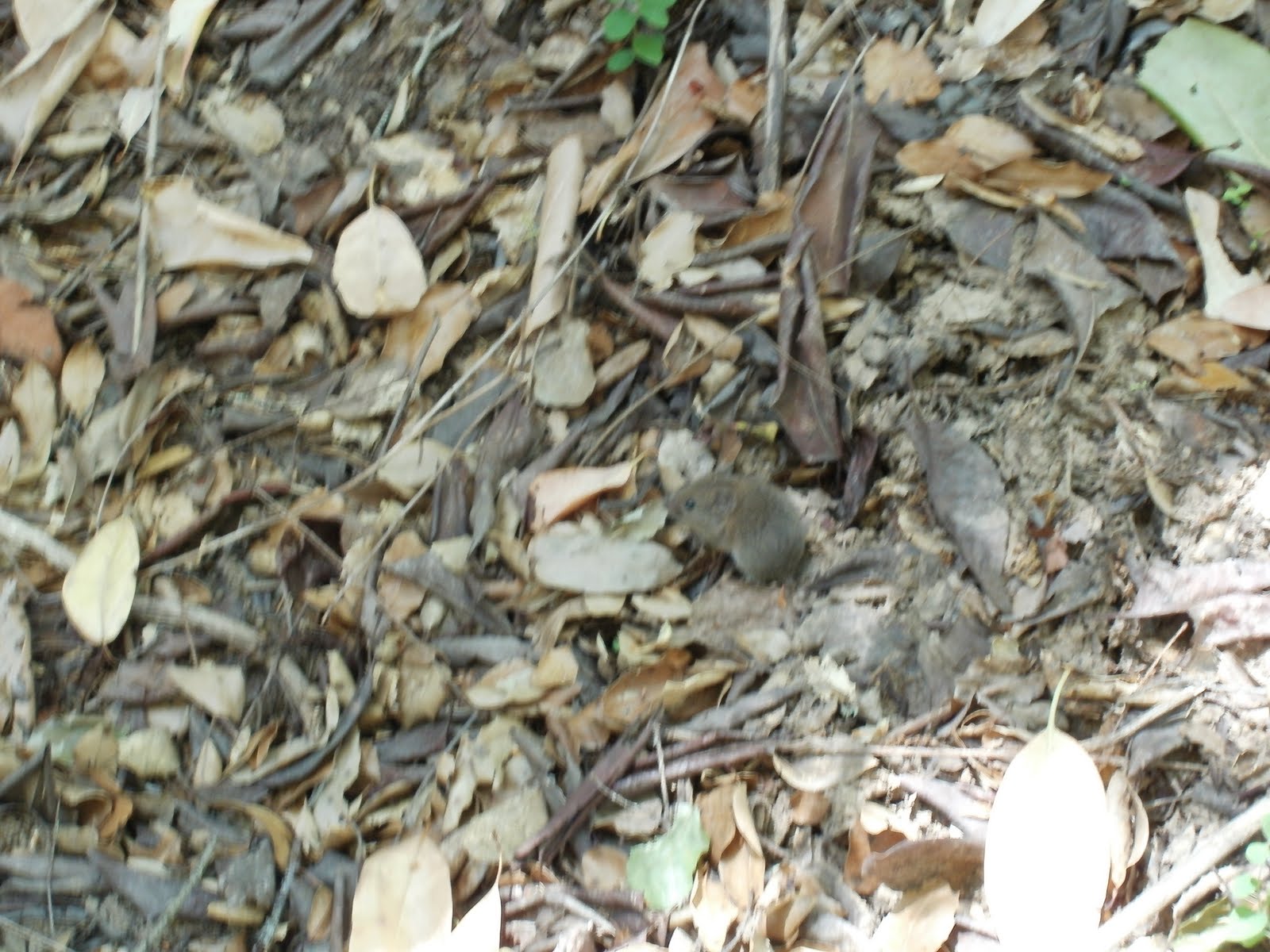
Now, the mouse is out of the house and has its chance in the wild. It was with great difficulty that I kept from naming it, but every single time I've named some wild little creature I'm trying to save, it always winds up dying! I'm not superstitious, but those are some pretty bad odds. This time, though, things seem to have gone rather well.
Monday, July 4, 2011
4th of July Wanderings
Happy 4th of July, world! Well, United States, at any rate. Not sure how much the rest of the world cares... Personally I'm in it for the fireworks. Or am I?
These last few years on the 4th, the trend seems to be that I start thinking about my relationships with the people I'm close to, more than any other day of the year. It has something to do with childhood memories of sitting with my parents in a field or on a crowded parking garage roof with folding chairs and blankets. Waiting for the fireworks and seeing them set off in distant cities.
See, now days it's not the same as when I was a kid. One year I was back East with my uncle and we saw the Boston Pops, which was awesome. And a couple years ago my mom and I went to see fireworks by a lake and met a bunch of people that live on boats, and even though my dad didn't come with us that time, it came pretty close to feeling the way it used to. But there's been a few years in there where something seemed to be missing.
Other holidays changing doesn't seem to bother me; I don't care that I'm too old to go trick or treating anymore, if we don't put up a Christmas tree, if we don't remember to light the candles for Chanukah, if I don't get a birthday cake, or even if there there are no potato latkes for Pesach... are right, there have to be latkes, but my point is that I'm usually all right with change.
Luckily, this year, my new friend and I managed to be out and about and get a lot of wandering in. And we may not see fireworks, but I feel good about the day. I guess that for whatever reason, on 4th of July, I just have to get out of the house and not be on my own.
Does anyone else have a holiday or tradition that affects them like this?
These last few years on the 4th, the trend seems to be that I start thinking about my relationships with the people I'm close to, more than any other day of the year. It has something to do with childhood memories of sitting with my parents in a field or on a crowded parking garage roof with folding chairs and blankets. Waiting for the fireworks and seeing them set off in distant cities.
See, now days it's not the same as when I was a kid. One year I was back East with my uncle and we saw the Boston Pops, which was awesome. And a couple years ago my mom and I went to see fireworks by a lake and met a bunch of people that live on boats, and even though my dad didn't come with us that time, it came pretty close to feeling the way it used to. But there's been a few years in there where something seemed to be missing.
Other holidays changing doesn't seem to bother me; I don't care that I'm too old to go trick or treating anymore, if we don't put up a Christmas tree, if we don't remember to light the candles for Chanukah, if I don't get a birthday cake, or even if there there are no potato latkes for Pesach... are right, there have to be latkes, but my point is that I'm usually all right with change.
Luckily, this year, my new friend and I managed to be out and about and get a lot of wandering in. And we may not see fireworks, but I feel good about the day. I guess that for whatever reason, on 4th of July, I just have to get out of the house and not be on my own.
Does anyone else have a holiday or tradition that affects them like this?
Saturday, July 2, 2011
Wounded Mouse Part 2
 Update: I checked in on our little friend a few minutes ago, and it seems to be alive and well enough to run to the other side of the cage when I peeked in (see previous post). I replaced the cap-full of water and put a few more of its favorite seeds in. It had picked out every sunflower seed in the food bowl, which is exactly what our pet rats used to do when we raised them. I also put a small amount of fresh veggies, since the mouse ate the ones from last night. Just some carrots and celery, since I read these are good "in moderation" and that's what I had in the fridge. I know mice need a balanced diet, but this should do for a couple days until I get something better.
I'm going to be gone most the day, so maybe later today or tomorrow I can get some mouse feed, a little fruit, and a proper water bottle for rodents (the kind where they lick at it, causing the ball bearing to get pushed back long enough for some water to come out). Before I leave I'll try cleaning its wounds again, then let it be for the day and hope for the best.
Friday, July 1, 2011
Wounded Mouse Part 1
I'm currently house sitting and taking care of a garden and two cats. Kneeda is a mostly grey cat with splotches of orange. Oliver is an orange Manx. Apparently, a bunch of mice have decided to move in as well. The first night I realized this was when I saw one scurry across the floor and under the washing machine. I set the live trap (took me quite a while, too), but so far the cats are the only ones that have had any success catching them.
The second night after the first sighting, Oliver stood guard, trying to pounce on the little mouse tail that would, on rare occasions poke out from under the stove. Kneeda, in the mean time, had managed to catch one. She caught and released it several times, chasing it all over the house for half an hour. That must have been a funny scene; panicked mouse scrambling from hiding place to hiding place, cat stalking, chasing, and intercepting it, and then me bumbling along after the both of them, plastic bowl in hand, ready to rescue the rodent in case Kneeda succeeded in catching it. Finally, the mouse hid where neither I nor the cat could locate it.
Several days passed without a mouse sighting. However, they did steal a chocolate chip cookie. I found the third-to-last one had fallen under the grate of one of the burners on the stove and had been nibbled at all around the edges. Shortly after which it vanished entirely.
Today was more eventful on the rodent front. Around 6 pm, I was called away most insistently from my computer by Oliver, who had caught a mouse. Such an event is not uncommon for Oliver, who in two weeks time has also caught four lizards and two baby garter snakes (all of which were released unharmed back outside). I was able to pick up the mouse without much difficulty, since it was frozen to the spot in fear. I placed it in a small container with a couple socks temporarily, but when I went to take it outside again, I discovered a spot of blood on one of the socks. Luckily I remembered that there was a spare cage for rodents in the tool shed, so I placed the mouse in that while I figured out what to do about its wounds.
The internet wasn't giving me answers as quickly as I would have liked, and I was worried because I knew cats' saliva has a lot of bacteria. Plus, for all I knew, a little blood loss for a mouse could be cause for concern. So I called my mom. She told me to take some hydrogen peroxide and dilute it a lot with water, then dab it on the wounds with a Q-tip. Easier said than done. I tried taking the mouse out of the cage, but had to put it back because it almost escaped. I had a hard time even seeing where the wound was, but I did my best to clean where I thought it was. Hopefully I managed to disinfect something... The mouse promptly burrowed back into the socks.
After a little research and some scavenging around the house, I put some bird seed mix and a small amount of raw veggies in the food bowl for the mouse. The only thing I couldn't find was a water bottle for rodents. Instead I settled for a small cap of water. I made sure it was filled very shallowly, since a friend told me about how surprisingly little water it takes for mice to drown. These tasks complete, I covered the cage with my sweater to keep it dark and let the mouse rest for a few hours.
Checked in on my little ward just before midnight, and it was asleep in the seeds (good to know it found the food). Still breathing. We'll see how he/she is doing in the morning.
The second night after the first sighting, Oliver stood guard, trying to pounce on the little mouse tail that would, on rare occasions poke out from under the stove. Kneeda, in the mean time, had managed to catch one. She caught and released it several times, chasing it all over the house for half an hour. That must have been a funny scene; panicked mouse scrambling from hiding place to hiding place, cat stalking, chasing, and intercepting it, and then me bumbling along after the both of them, plastic bowl in hand, ready to rescue the rodent in case Kneeda succeeded in catching it. Finally, the mouse hid where neither I nor the cat could locate it.
Several days passed without a mouse sighting. However, they did steal a chocolate chip cookie. I found the third-to-last one had fallen under the grate of one of the burners on the stove and had been nibbled at all around the edges. Shortly after which it vanished entirely.
Today was more eventful on the rodent front. Around 6 pm, I was called away most insistently from my computer by Oliver, who had caught a mouse. Such an event is not uncommon for Oliver, who in two weeks time has also caught four lizards and two baby garter snakes (all of which were released unharmed back outside). I was able to pick up the mouse without much difficulty, since it
 was frozen to the spot in fear. I placed it in a small container with a couple socks temporarily, but when I went to take it outside again, I discovered a spot of blood on one of the socks. Luckily I remembered that there was a spare cage for rodents in the tool shed, so I placed the mouse in that while I figured out what to do about its wounds.
The internet wasn't giving me answers as quickly as I would have liked, and I was worried because I knew cats' saliva has a lot of bacteria. Plus, for all I knew, a little blood loss for a mouse could be cause for concern. So I called my mom. She told me to take some hydrogen peroxide and dilute it a lot with water, then dab it on the wounds with a Q-tip. Easier said than done. I tried taking the mouse out of the cage, but had to put it back because it almost escaped. I had a hard time even seeing where the wound was, but I did my best to clean where I thought it was. Hopefully I managed to disinfect something... The mouse promptly burrowed back into the socks.
After a
 little research and some scavenging around the house, I put some bird seed mix and a small amount of raw veggies in the food bowl for the mouse. The only thing I couldn't find was a water bottle for rodents. Instead I settled for a small cap of water. I made sure it was filled very shallowly, since a friend told me about how surprisingly little water it takes for mice to drown. These tasks complete, I covered the cage with my sweater to keep it dark and let the mouse rest for a few hours.
Checked in on my little ward just before midnight, and it was asleep in the seeds (good to know it found the food). Still breathing. We'll see how he/she is doing in the morning.
Thursday, June 30, 2011
Touch Typing with One Hand
I am trying to figure out how to touch type with one hand. I think I'm doing pretty well, since I'm typing this very post with only my right hand. I don't know what prompted me to want to do this; perhaps it's my interest in doing things differently (such as trying to be ambidextrous), or maybe I had to try to type in a search while holding a phone one too many times. In any case, it's kinda fun.
My method and findings so far: I place my index finger on the "F" key and let my other fingers rest on the G, H, and J keys. This puts my hand right in the center of the keyboard and is convenient for finding my hand placement because of the little ridge on the F. I was somewhat surprised how little I had to think about how to get to the various keys. I have to stretch a little further, but I can find my way fairly easily. I suppose all the years I've been touch typing in general has given me a pretty solid idea of how the QWERTY keyboard is laid out.
Now, the main thing that feels really different from typing with both hands is how much more I'm using my little finger. Here's what I mean; my index finger hits 12 letters, middle finger only 3, ring finger 4, and little finger 6 letters plus the semicolon, comma, period, quotes, backspace, and enter. (I was hitting the "I" with my little finger also, but I was getting terribly confused with the I, O, and P, so I started just stretching my ring finger to get to it.)
Alright, so I wanted to see how fast I could type this way right when I was first learning. I did a control test by seeing how long it takes me to type a random page of a book normally, which came to about 70 words per minute. Then I typed that same page with just the one hand, and it came to a whopping 9 words per minute. My second try gave me 11 wpm. Yay! Never mind that it took me more than 45 minutes per try, I'm confident I can get it up to at least 50 wpm with a bit more practice.
More related thoughts: So one thing I noticed is that, unlike typing with two hands, I will occasionally vary which finger I use for certain keys. This has to do with which words I'm typing. For example, for the word "there" I will alternate between my index and middle finger for the "ere" because it's easier and more efficient than using only my index. This made me wonder how it might be possible to find the most effective typing pattern for any word? Or even better, the best keyboard layout for one hand? It would have to take into account not only the most common keys used, but the most common combinations of letters in a language and the fact that the little finger wears out faster than the others. Also, perhaps the thumb could be more useful?
Just a starting place for these thoughts, I'll probably start looking up custom keyboards now. I know a little about the DVORAK, but that's about it.
My method and findings so far: I place my index finger on the "F" key and let my other fingers rest on the G, H, and J keys. This puts my hand right in the center of the keyboard and is convenient for finding my hand placement because of the little ridge on the F. I was somewhat surprised how little I had to think about how to get to the various keys. I have to stretch a little further, but I can find my way fairly easily. I suppose all the years I've been touch typing in general has given me a pretty solid idea of how the QWERTY keyboard is laid out.
Now, the main thing that feels really different from typing with both hands is how much more I'm using my little finger. Here's what I mean; my index finger hits 12 letters, middle finger only 3, ring finger 4, and little finger 6 letters plus the semicolon, comma, period, quotes, backspace, and enter. (I was hitting the "I" with my little finger also, but I was getting terribly confused with the I, O, and P, so I started just stretching my ring finger to get to it.)
Alright, so I wanted to see how fast I could type this way right when I was first learning. I did a control test by seeing how long it takes me to type a random page of a book normally, which came to about 70 words per minute. Then I typed that same page with just the one hand, and it came to a whopping 9 words per minute. My second try gave me 11 wpm. Yay! Never mind that it took me more than 45 minutes per try, I'm confident I can get it up to at least 50 wpm with a bit more practice.
More related thoughts: So one thing I noticed is that, unlike typing with two hands, I will occasionally vary which finger I use for certain keys. This has to do with which words I'm typing. For example, for the word "there" I will alternate between my index and middle finger for the "ere" because it's easier and more efficient than using only my index. This made me wonder how it might be possible to find the most effective typing pattern for any word? Or even better, the best keyboard layout for one hand? It would have to take into account not only the most common keys used, but the most common combinations of letters in a language and the fact that the little finger wears out faster than the others. Also, perhaps the thumb could be more useful?
Just a starting place for these thoughts, I'll probably start looking up custom keyboards now. I know a little about the DVORAK, but that's about it.
Sunday, June 26, 2011
Dualistic Debates
So often we think of things in a very dualistic manner. Just look at politics; on almost any given hot-button issue there will be one "side" saying one thing and the other side saying another. Each side has it's set of reasons as well as it's set of arguments against the other side's reasons. Each argument seems to be set up to end in stalemate every single time. What strikes me as odd is that once you've heard the argument once, there doesn't seem to be much new added thereafter. You'd think there would at least be several different sets of reasons for each side of an issue.
I took a look at myself and what I do when I'm forming an opinion on an issue, and to my horror this is what I tend to do: choose a side and adopt its pre-formed set of arguments. And all the while I thought I was thinking for myself... What I've since realized is that if I try to see what I agree with in the opposing side of the issue, I often come up with new ways of looking at things. Sometimes it's a combination of each side's point of view that works best, sometimes a third, completely separate solution forms, and sometimes I stick with my original choice but for completely different reasons than what I started with.
It just reinforces a realization I had a few years back that much of the dichotomy between political parties is an illusion. Taking on a label can be a nice, handy way of defining a viewpoint or aspect of yourself, but you have to keep in mind that it comes with all the other possible interpretations people might come up with for that label. Be prepared for many misunderstandings before you even have a chance to explain yourself. Or realize that there is a misunderstanding.
Here's one of the best examples I can offer: I used to consider myself a Democrat. One day my dad read a selection from one of Anne Coulter's books. In it, she defined what a Democrat was with a series of descriptive adjectives. Shockingly, every single one of those adjectives were exactly what I would have used to describe a Republican! (With the exception of "terrorist sympathizer", which was really more an amusing attempt at an insult than an actual descriptive term.) If that's what Republicans think Democrats are, I reasoned, all we have to do is switch a few labels around and we'd be in almost complete agreement!
Okay, so maybe it's not that simple. But I did learn a couple things. First, that I should be very careful with assigning labels to myself. Second, that it might be useful for me to look into the underlying values Republicans have (as well as others of differing opinions), because I might surprise myself and find something there that I can relate to. Or better yet, something that I can learn to relate to.
There's one more thing I'd like to bring up; debating. Can't stand it. Don't get me wrong, it has its place. It can be very useful for showing flaws in reasoning as well as honing one's abilities for persuasion. It's just not for me. I have a hard enough time communicating an idea without someone trying to prove me wrong. See, if you're putting all your focus on showing what's wrong with the other person's words, you run the risk of completely missing their meaning.
Personally, I prefer a more "philosophical" discussion. When I'm forming a new idea, that idea is going to change a lot as I find flaws with it and think up changes and come up with new ideas that might work better. Inevitably I will hit a brick wall where there is still something I don't understand and I'm repeating the same old thoughts.
At this point I try to seek new input in order to dig deeper. This requires someone who will first try to understand the meaning behind what I'm saying. In other words, I have to bring them to the point where I encountered that metaphorical brick wall. After that, their unique perspective becomes especially helpful. Needless to say, both parties can benefit from such a discussion as ideas are exchanged and modified. Sometimes those passing "stupid" thoughts that wouldn't last a millisecond in a debate can lead the conversation into rarely explored territory that is much more interesting.
I took a look at myself and what I do when I'm forming an opinion on an issue, and to my horror this is what I tend to do: choose a side and adopt its pre-formed set of arguments. And all the while I thought I was thinking for myself... What I've since realized is that if I try to see what I agree with in the opposing side of the issue, I often come up with new ways of looking at things. Sometimes it's a combination of each side's point of view that works best, sometimes a third, completely separate solution forms, and sometimes I stick with my original choice but for completely different reasons than what I started with.
It just reinforces a realization I had a few years back that much of the dichotomy between political parties is an illusion. Taking on a label can be a nice, handy way of defining a viewpoint or aspect of yourself, but you have to keep in mind that it comes with all the other possible interpretations people might come up with for that label. Be prepared for many misunderstandings before you even have a chance to explain yourself. Or realize that there is a misunderstanding.
Here's one of the best examples I can offer: I used to consider myself a Democrat. One day my dad read a selection from one of Anne Coulter's books. In it, she defined what a Democrat was with a series of descriptive adjectives. Shockingly, every single one of those adjectives were exactly what I would have used to describe a Republican! (With the exception of "terrorist sympathizer", which was really more an amusing attempt at an insult than an actual descriptive term.) If that's what Republicans think Democrats are, I reasoned, all we have to do is switch a few labels around and we'd be in almost complete agreement!
Okay, so maybe it's not that simple. But I did learn a couple things. First, that I should be very careful with assigning labels to myself. Second, that it might be useful for me to look into the underlying values Republicans have (as well as others of differing opinions), because I might surprise myself and find something there that I can relate to. Or better yet, something that I can learn to relate to.
There's one more thing I'd like to bring up; debating. Can't stand it. Don't get me wrong, it has its place. It can be very useful for showing flaws in reasoning as well as honing one's abilities for persuasion. It's just not for me. I have a hard enough time communicating an idea without someone trying to prove me wrong. See, if you're putting all your focus on showing what's wrong with the other person's words, you run the risk of completely missing their meaning.
Personally, I prefer a more "philosophical" discussion. When I'm forming a new idea, that idea is going to change a lot as I find flaws with it and think up changes and come up with new ideas that might work better. Inevitably I will hit a brick wall where there is still something I don't understand and I'm repeating the same old thoughts.
At this point I try to seek new input in order to dig deeper. This requires someone who will first try to understand the meaning behind what I'm saying. In other words, I have to bring them to the point where I encountered that metaphorical brick wall. After that, their unique perspective becomes especially helpful. Needless to say, both parties can benefit from such a discussion as ideas are exchanged and modified. Sometimes those passing "stupid" thoughts that wouldn't last a millisecond in a debate can lead the conversation into rarely explored territory that is much more interesting.
Friday, June 24, 2011
Silly Writing Exercise
A friend of mine sent me this link about writing exercises. I chose the exercise where two characters have a secret which isn't revealed to the reader or to each other. I'm not sure how well portrayed the secrets, but what came out of it was a first draft of this (rather silly) little story:
The Gnome Man's Land Pub* always had some rather eccentric people mixed in with the more normal folk. For example, tonight there was some short dude in a hooded cloak sitting at the bar. At least, Eddie was pretty sure it was a dude. It was hard to tell with the cloak and the dim lighting. Normally Eddie would have just gotten a beer or four and been on his way, but now he was wondering if maybe it wasn't a dude. In fact, he got to wondering so much that he made his way over just to find out.
"Excuse me, miss." Eddie said hopefully.
The figure turned, meeting his increasingly nervous face with the shadowy depths beneath it's hood. "I am not," began a squeaky voice, "a miss!"
"Ma'am?"
"No. I am male, you insufferable dolt!" The figure scrambled to stand up on the bar stool in an attempt to look more intimidating.
"I am sorry, small boy!"
"I am not...! Agh, never mind what I am or am not." The cloaked dude poked a gloved finger at Eddie's forehead. "You, foul sir, owe me a beer to make amends for the insults. This is custom, yes?"
"Uh," Eddie scratched his chin, "Yeah sure, why not."
The bartender walked by. "Ya know what's also custom is ta put yer behind insteada yer feet on da stool."
"Apologies." The cloaked dude plopped back down. "And now, beverages!"
The bartender stared a moment, then turned to Eddie, the more familiar patron. "Jus' two beers, Ralph, if ya don' mind." Eddie said. Ralph shrugged and went off to fetch the beers.
"Now," said the cloaked dude, "Your name and purpose for accosting me."
"The name's Eddie." said Eddie. "As fer me purpose, I don' reckon I have none no more seein' as how yer not a miss."
"Ah, I see. And now in turn, as is custom, I shall supply my own name and purpose. I am called Alfie, and I am in this filthy little town of yours only because I am in desperate need of a mechanic."
Eddie wondered where on Earth this crack pot came from. He said as much (in a more polite manner, of course). Alfie replied that it was none of his business 'you stupid toad'.
"And are you a mechanic?" Alfie inquired suddenly.
Eddie was so surprised by the change of subject that he forgot to be offended by Alfie's latest insult. "No, I'm a lumberjack." Eddie said.
"Oh. Explains the axe. Perhaps some companionable chat-chit to pass the time? I take it females are in short supply this season?"
"Actually, come to think of it, there are less women 'round town than there used to be. Smaller population in gen'ral, really. But I don't think that's what my problem is..."
"Perhaps they simply consider you too ugly."
Eddie felt a sudden urge to knock the little pipsqueak off his stool, but he remembered how his mother used to tell him to never get caught fighting. And he never did get caught at it, no ma'am. He downed his drink in one go as soon as Ralph came by with the beers. He signaled for a second beer and downed that as well.
Alfie took Eddie's silence as a reason to continue. "You don't look much like a jack lumberer. Aren't you supposed to have a beard?"
"I use ta have a beard, but I had ta start shavin', 'cause I kept gettin' lice an such."
"What is lice? Can you eat that?"
"I reckon ya could," Eddie said thoughtfully, "If'n youse was real hungry-like."
"Is it just my imagination, or is your grammar getting even more atrocious by the second?"
"Don' know whacha mean by 'ateriosus', but me mum always said I star' talkin' worsin' wi da alchi-hal. Whate'er dat is."
"My, I am finding this quite amusing. Waiter! Another beer! Oh waiter!" Alfie snapped his fingers; quite a feat with gloves on. Ralph gave Alfie a dirty look, but brought forth another beer nevertheless before stalking off.
"Aren't you supposed to wear plaid, too?" Alfie asked Eddie, as Eddie began guzzling the most recent mug of beer.
"Whachyer, yer, yer idear of a lumberjack, 'nyways?" Eddie asked between swigs.
Alfie pointed to the picture of a lumberjack, printed on a package of paper towels.
"I's got tha' same axe, I 'as."
"Ha. Well, maybe that dull axe would be enough to make you into the next jack lumbering star, if only you weren't so downright ugly. Which parent did you get your unfortunate genetics from? I'm only curious. You see, I'm studying the biology of unfortunate mutations. Was it your mother? Father? Perhaps some kind of recessive gene?"
Ralph came by again to start wiping down the bar, hoping Eddie and Alfie would get the message and go home like everyone else already had.
"Ralph, ano'er beer hic, den I'ma gonna slug this 'ere sucker!" Eddie said.
"Now Eddie, ya know three's yer limit." Ralph said.
"I don' care! hic I don' care! I'll, I'll, hic, where's me axe?"
"Ah yes, I took the liberty of storing that behind the bar, here, 'till ya clear yer head."
"Well now," Alfie cut in calmly, "For the payment." There was the sound of metal jingling as Alfie fished through a small bag. He brought out a handful of what looked to be bits and pieces of some rusty old machine.
Ralph groaned, "How many times do I have ta tell you people! Coins only!"
"Oh. Well, no matter. My misbegotten buddy, Eddie here, shall pay. He owes me for the insults anyway."
"Me!? hic I'm da won hic tha's insultin'?!"
"Yes. Obviously your mother never even taught you proper manners."
"You little...!" Eddie rushed at Alphie, or tried to. He wound up on the floor, sobbing. "hic Me poor mum, me poor ole hic mum..."
Alfie stood up (or hopped down, more accurately), stepped over Eddie, then made to leave.
"Ya didn't even try da beer!" Ralph said, offended.
Alfie tentatively took a sip of his untouched beer, then promptly spit it back into the mug. "A nasty substance! Here, you sniveling mass of snot, you take it." Alfie poured the beer over the sobbing and hiccuping Eddie and walked out into the night, the sounds of shattering glass and loud admonishments from Ralph behind him.
To be continued...
*After I finished the story, I typed in "Gnome Man's Land" into Google, and was dismayed to find thousands of results for the exact phrase. Guess it's hard to come up with something truly original with over 6 billion people in the world plus history, eh?
The Gnome Man's Land Pub* always had some rather eccentric people mixed in with the more normal folk. For example, tonight there was some short dude in a hooded cloak sitting at the bar. At least, Eddie was pretty sure it was a dude. It was hard to tell with the cloak and the dim lighting. Normally Eddie would have just gotten a beer or four and been on his way, but now he was wondering if maybe it wasn't a dude. In fact, he got to wondering so much that he made his way over just to find out.
"Excuse me, miss." Eddie said hopefully.
The figure turned, meeting his increasingly nervous face with the shadowy depths beneath it's hood. "I am not," began a squeaky voice, "a miss!"
"Ma'am?"
"No. I am male, you insufferable dolt!" The figure scrambled to stand up on the bar stool in an attempt to look more intimidating.
"I am sorry, small boy!"
"I am not...! Agh, never mind what I am or am not." The cloaked dude poked a gloved finger at Eddie's forehead. "You, foul sir, owe me a beer to make amends for the insults. This is custom, yes?"
"Uh," Eddie scratched his chin, "Yeah sure, why not."
The bartender walked by. "Ya know what's also custom is ta put yer behind insteada yer feet on da stool."
"Apologies." The cloaked dude plopped back down. "And now, beverages!"
The bartender stared a moment, then turned to Eddie, the more familiar patron. "Jus' two beers, Ralph, if ya don' mind." Eddie said. Ralph shrugged and went off to fetch the beers.
"Now," said the cloaked dude, "Your name and purpose for accosting me."
"The name's Eddie." said Eddie. "As fer me purpose, I don' reckon I have none no more seein' as how yer not a miss."
"Ah, I see. And now in turn, as is custom, I shall supply my own name and purpose. I am called Alfie, and I am in this filthy little town of yours only because I am in desperate need of a mechanic."
Eddie wondered where on Earth this crack pot came from. He said as much (in a more polite manner, of course). Alfie replied that it was none of his business 'you stupid toad'.
"And are you a mechanic?" Alfie inquired suddenly.
Eddie was so surprised by the change of subject that he forgot to be offended by Alfie's latest insult. "No, I'm a lumberjack." Eddie said.
"Oh. Explains the axe. Perhaps some companionable chat-chit to pass the time? I take it females are in short supply this season?"
"Actually, come to think of it, there are less women 'round town than there used to be. Smaller population in gen'ral, really. But I don't think that's what my problem is..."
"Perhaps they simply consider you too ugly."
Eddie felt a sudden urge to knock the little pipsqueak off his stool, but he remembered how his mother used to tell him to never get caught fighting. And he never did get caught at it, no ma'am. He downed his drink in one go as soon as Ralph came by with the beers. He signaled for a second beer and downed that as well.
Alfie took Eddie's silence as a reason to continue. "You don't look much like a jack lumberer. Aren't you supposed to have a beard?"
"I use ta have a beard, but I had ta start shavin', 'cause I kept gettin' lice an such."
"What is lice? Can you eat that?"
"I reckon ya could," Eddie said thoughtfully, "If'n youse was real hungry-like."
"Is it just my imagination, or is your grammar getting even more atrocious by the second?"
"Don' know whacha mean by 'ateriosus', but me mum always said I star' talkin' worsin' wi da alchi-hal. Whate'er dat is."
"My, I am finding this quite amusing. Waiter! Another beer! Oh waiter!" Alfie snapped his fingers; quite a feat with gloves on. Ralph gave Alfie a dirty look, but brought forth another beer nevertheless before stalking off.
"Aren't you supposed to wear plaid, too?" Alfie asked Eddie, as Eddie began guzzling the most recent mug of beer.
"Whachyer, yer, yer idear of a lumberjack, 'nyways?" Eddie asked between swigs.
Alfie pointed to the picture of a lumberjack, printed on a package of paper towels.
"I's got tha' same axe, I 'as."
"Ha. Well, maybe that dull axe would be enough to make you into the next jack lumbering star, if only you weren't so downright ugly. Which parent did you get your unfortunate genetics from? I'm only curious. You see, I'm studying the biology of unfortunate mutations. Was it your mother? Father? Perhaps some kind of recessive gene?"
Ralph came by again to start wiping down the bar, hoping Eddie and Alfie would get the message and go home like everyone else already had.
"Ralph, ano'er beer hic, den I'ma gonna slug this 'ere sucker!" Eddie said.
"Now Eddie, ya know three's yer limit." Ralph said.
"I don' care! hic I don' care! I'll, I'll, hic, where's me axe?"
"Ah yes, I took the liberty of storing that behind the bar, here, 'till ya clear yer head."
"Well now," Alfie cut in calmly, "For the payment." There was the sound of metal jingling as Alfie fished through a small bag. He brought out a handful of what looked to be bits and pieces of some rusty old machine.
Ralph groaned, "How many times do I have ta tell you people! Coins only!"
"Oh. Well, no matter. My misbegotten buddy, Eddie here, shall pay. He owes me for the insults anyway."
"Me!? hic I'm da won hic tha's insultin'?!"
"Yes. Obviously your mother never even taught you proper manners."
"You little...!" Eddie rushed at Alphie, or tried to. He wound up on the floor, sobbing. "hic Me poor mum, me poor ole hic mum..."
Alfie stood up (or hopped down, more accurately), stepped over Eddie, then made to leave.
"Ya didn't even try da beer!" Ralph said, offended.
Alfie tentatively took a sip of his untouched beer, then promptly spit it back into the mug. "A nasty substance! Here, you sniveling mass of snot, you take it." Alfie poured the beer over the sobbing and hiccuping Eddie and walked out into the night, the sounds of shattering glass and loud admonishments from Ralph behind him.
To be continued...
*After I finished the story, I typed in "Gnome Man's Land" into Google, and was dismayed to find thousands of results for the exact phrase. Guess it's hard to come up with something truly original with over 6 billion people in the world plus history, eh?
Subscribe to:
Posts (Atom)